RMB Hypnotherapy and Mindfulness - Birmingham
Catch me on social media
  • Home
  • Hypnotherapy
    • Booking - One to One Hypnotherapy / Mindfulness Appointments
    • Stress and Anxiety
    • Hypnobirthing
    • Stop Smoking
    • Driving Test Anxiety
    • Try self-hypnosis for yourself right now
  • Mindfulness
    • Booking - Official Mindfulness Now 8 week Programme
    • Issues that Mindfulness may help with
    • Try mindfulness for yourself right now
  • About Rachel
    • My Qualifications
  • UK COLLEGE SUPPORT
  • Recommended by...
    • Hypnotherapy Testimonials
    • Mindfulness Groups Testimonials

In2 minds

Welcome to my blog page, called In2 minds because that's what I was in when I started it!
Snippets that I hope you might find interesting, fun or helpful to do with mental health and well-being, and sometimes not!

Home

10 things I bet you didn’t know about hypnosis!

28/2/2016

0 Comments

 
Hypnotic swirl

1. Hypnosis can help people to manage pain. The ability to tap into the subconscious part of our minds whilst using different techniques to focus on the pain can actually help to transform the experience of the pain itself.
 
2. Hypnosis can distort the effects of time. Hypnosis can be used to lengthen or shorten time, depending on the desired outcome. Very often, the length of time one stays in hypnosis appears a lot shorter than it actually is, 30 minutes say, feeling more like 10.
 
3. We all allow ourselves to undergo self-hypnosis many times every single day. If anyone has ever asked you a question and you’ve replied - “Oh sorry, what did you say? I was in a world of my own then!” – then you had been briefly under your own spell of self-hypnosis, being physically present but miles away in your own little world of daydreaming.
 
4. The word hypnosis stems from the Greek god of sleep, Hypnos.
His Roman counterpart was Somnus, from where we derive the word insomnia.
 
5. Hypnosis has been used as a surgical anaesthetic as far back as the mid nineteenth century. James Esdaile was a surgeon with a reputation and was the first (in modern times) to have been documented as having used hypnosis as an anaesthetic.
 
6. Hypnosis was used in the treatment of soldiers in the American Civil War (1861-1865) where limb amputations were carried out in the field with no other forms of anaesthetic available at the time.
 
7. Hypnosis was being endorsed by the British Medical Association as far back as 1892 following the first International Congress on hypnosis held in Paris in 1889.
 
8. Hypnosis was used in the treatment of battle trauma (which we would now call Post Traumatic Stress Disorder – PTSD) in both World Wars and the Korean War. Schultz, a German surgeon, instigated a technique which he called autogenic training to treat such trauma.
 
9. People often regard hypnobirthing (the use of hypnosis to facilitate a calmer, more comfortable experience) as a very modern technique.  However, with The British Hypnotism Act being passed in 1952 the use of hypnosis as an anaesthetic during childbirth was allowed by the British Medical Association in 1955.
 
10. It is estimated that the use of hypnosis goes back more than 6000 years with ancient texts and cave drawings documenting the effects of the hypnotic trance through the ages. Various archeological records refer to the ancient Hindus and Sikhs of India, and ancient Greeks and Egyptians, as having temples to which they devoted the purpose of sleep and healing, and where the people attending would be given healing suggestions while in a state of ‘induced sleep’.

If you think that hypnosis might help you please get in touch with Rachel at:
[email protected]
Or you can fill in the contact form here
Or ring me on 07733 839 591

0 Comments

5 'mores' of Mindfulness.

7/1/2016

0 Comments

 
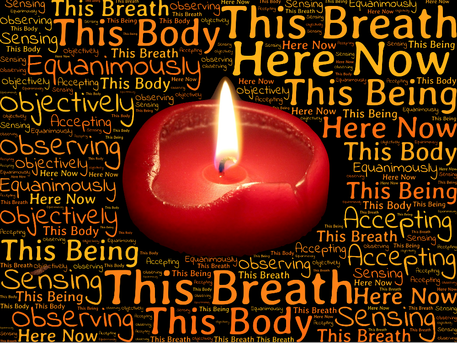
Mindfulness words and candle
There are many benefits of practising mindfulness regularly. Most people, nowadays, are aware of the fact that mindfulness can be a way to achieve a more relaxed sense of well-being, a way of helping overcome patterns of negative thinking, whether that thinking is based in the past or the future.
 
However, there are a number of ‘side effects’ that mindfulness can bring to a person’s everyday life. Here, I’ll outline 5 ‘mores’ of mindfulness, all helping you to achieve a better quality of life:
 
1. Mindfulness can make you more curious.
When we focus on a specific thought or emotion or sensation, we can train ourselves to ask ‘What is going on here?’ or ‘What is this trying to tell me?’ or ‘I wonder what might happen next?’ So often in life we become a slave to what we feel, both physically and emotionally. We get caught up in reacting to whatever’s happening without a second thought. And if this is a particularly stressful situation, it can lead to a negative spiralling out of control.
Just taking a moment or two to step aside, almost as if looking in on the situation from the outside, being curious about things, opens up the possibility of new potential outcomes that perhaps had never even crossed your mind before.
 
2. Mindfulness can make you more grateful.
Mindfulness often encourages us to focus on the small, subtle details of life, those that we might ordinarily be completely unaware of. We can focus on the intricacies of a flower petal, all the subtle aromas concealed within a cup of coffee, a warm relaxed sensation in our hands, a gentle sleepiness behind our eyes, or the thought of the smile of a loved one. When we spend a little time doing this, seeing things as though for the first time, we’re less likely to take things for granted and more likely to experience the beauty in the everyday.
 
3. Mindfulness can make you more accepting.
Contrary to popular belief, mindfulness is not about living a wonderfully relaxed way of life with no upsets and a clear mind. Instead, it is about coming to terms with the fact that life happens – and some of it’s good and some of it’s rubbish, but it’s all part of being human and being alive in this very moment. No-one has a perfect life where everything is hunky-dory. Everyone experiences sadness, happiness, stress, relaxation, guilt, anger, joy and love. Noticing that all of these things ebb and flow over time, increasing and decreasing in intensity, makes it a little easier to accept things when they happen.
 
4. Mindfulness can make you more compassionate.
We’re all in this together. We’re all trying to do the best we can. We can all love others and be loved ourselves. We can all upset others and be upset ourselves. We can all help and be helped, laugh and make laugh, hurt and be hurt, judge and be judged.
When someone crosses us, we automatically go on the defence. And sometimes the way we defend ourselves is to attack back, whether it be through an unkind word or a thoughtless action. Noticing when we might react like this and asking whether it’s really the best thing to do helps us to see things differently. As a result, we might even start to see things from the other’s point of view, beginning to understand why someone said or did something, feeling empathy towards them.
We are also much more able to understand how everybody, every animal, every plant, every thing in the world is doing the best they know how to be whoever or whatever they are, and that that’s ok. We all have our place in the world.
 
5. Mindfulness can make you more at ease.
Mindfulness is all about living in the present moment and noticing what’s going on right at that very moment, whether it be in our thoughts, emotions, our breathing, our senses or our physical sensations. Becoming more of an observer of these things instead of automatically reacting with them, to be curious about what’s going on instead of automatically jumping to conclusions, and to be more compassionate towards ourselves as well as others, can help us to become more at ease.
As I said before, mindfulness does not make the bad stuff in life disappear, and nor should it. It just helps us to become more of a yacht cutting through the waves rather than a dinghy being tossed around by them.
 
If you’d like more information about the benefits of mindfulness and how it works please visit my website at
www.rmbhypnotherapy.com
 
If you’d like to experience mindfulness for yourself, please feel free to book in to one of our weekly group sessions (Wednesdays 7.15-8.15) at Central England Holistic Therapy Centre, Alcester Road, Kings Heath. Call 0121 444 1110 to book your place or visit
www.blueskymind.org.uk


0 Comments

Get mind-fit, ready for Christmas!

29/11/2015

0 Comments

 
Christmas shoppers
Christmas is often a very emotionally charged time of the year, for all sorts of reasons.
Although it’s always conveyed in films and the media as such a happy and joyous occasion, it often has very different connotations for each and every one of us. We think we’re supposed to be perfect, organised, relaxed and happy at this time of year – you only have to switch on the television to see portrayals of smiley, happy families, sitting around a dining table that’s heaving with perfectly cooked food; children receiving the perfect gifts; everybody having a good time; it’s even snowing most of the time (perfect, white fluffy snow to provide the perfect backdrop for perfectly-lit Christmas trees, Christmas lights and reindeer).
It’s amazing really, how much of this made-up reality we still really expect!

In reality, there are all sorts of things that will inevitably stop this time of year being perfect for so many of us:


- financial worries
- having to get along with family with whom we perhaps don’t always have the greatest of relationships
- fitting in so many social engagements, that we would perhaps not usually choose to do
- or conversely, seeing everyone else out ‘enjoying themselves’ whilst we are stuck at home for whatever reason (family commitments, illness, finances etc); feeling as though we’re the only ones being left out
- feeling the need to do so much extra shopping – for gifts, food, drink, and all the trimmings
- feeling, for whatever reason, as though we don’t fit into the ‘norm’
- missing people who are away from home at Christmas or loved ones who have died
- mid-winter blues and/or Seasonal Affective Disorder (SAD)
- exhaustion
- anxiety and depression centred around excessive commercialism
- shame, guilt, and feeling as though we’re failures if we don’t live up to perceived expectations
- feeling as though everything has to be crammed into a few days!
- the list goes on…


All of these factors can have very real side-effects:

- tension headaches

- muscle fatigue
- excessive drinking
- mood swings
- comfort eating
- insomnia
- to name but a few… sometimes leading to more serious mental health problems in the short-term or in the long-run.


Using various techniques such as NLP Coaching, Mindfulness and, of course, Hypnotherapy, you can help yourself to feel more empowered at this time of the year, feeling more in control and less at the whim of what films, television and other people seem to demand of you.
If you take the opportunity now, in the run-up to Christmas, to take back control of the more hindering patterns of behaviour and thinking, it might just make a positive difference.
 
Here are a few tips that might help at this time of the year:
 
Notice the needless pressures
Take just a moment or two to step back from the pressures to be a certain way, or do certain things. You might begin to realise how we’re constantly ‘hypnotised’ by advertising and by the pressures others put upon us. What’s really important to you and your loved ones? Is it really that important to you to go to the annual corporate staff party, seeing people you already see all day every day anyway? Or would you genuinely prefer to spend the time at home with family and special friends of your choosing? Is it more important to throw the party extravaganza of the year or simply to have a few friends round for a few friendly drinks? Also, try to notice how many times you get (for want of a better expression) ‘bullied’ into doing these things or risk being seen as ‘a Scrooge’ or ‘Grinch’ if you don’t. Instead of getting swept along with what everyone else wants, this standing back and taking notice on purpose can enable you to make more enjoyable choices for you which will inevitably lead to a far happier and more relaxed time for everyone involved.
 
Notice your thought patterns
Many of us fool ourselves into thinking that this year we’ll have the perfect Christmas. And then we end up saying things like “All I want to do is relax and enjoy it but I don’t have the time,” because usually we’re too busy trying to make everything perfect!
Also realise that most people are in exactly the same boat as you – despite the fact that they might be trying to fool everyone else into thinking that they’re having a perfect time too!
Just noticing these things, and similar, going on in your thoughts can help to make a positive difference. It puts a little bit of space between you and what you’re thinking, which can feel very liberating.
 
Spread things out
Often, we try to cram so much into so few days. So instead of trying to see everyone at Christmas, why not make a date now for sometime in the new year when everyone is perhaps feeling a little less stressed and has more time? Organise a day out with special friends in January for a change; make a note in your new diary of catching up with someone during one of the weekends after Christmas. Often, during the time immediately after Christmas some people can feel a little low – the days are still very short, the weather’s less than appealing… and you don’t have Christmas to look forward to! So having something booked in to look forward to can make a huge difference – and it helps to spread things out a bit and take the pressure off too.
 
Remember you're only human
Remember that being human involves negative emotions too. No-one can be constantly happy, even at Christmas. And, in a way, that’s ok. Emotions come and go, just like Christmases.
Often, because we feel the pressures of having to ‘put on a happy front’, we end up feeling even worse. Not many of us have perfect lives. Many of us are having to contend with anxieties and depressions concerning all sorts of different things that are personal to us.
We might be dealing with bereavement, long term illness (ourselves or loved ones), unemployment, debt, emotional or physical abuse, redundancy… So try to go easy on yourself.
 
Plan in advance
No, I‘m not talking about making lists of things to do and people to see (although these can really help to make you feel more in control). I’m talking about thinking in advance of potential pitfalls that could jeopardise your happiness at this time of the year. For example, if you’ve recently given up smoking or are cutting down on alcohol, then it might be a good idea to think of all the potential triggers that might crop up – you know what they are for you. Even feeling social anxiety can be eased by thinking in advance of what things trigger certain reactions and what action you can take to help the way you feel. Christmas is a time for comfort eating too, and the pounds can soon pile on, so just being aware of any potential triggers, and having a back-up plan just in case can help to ease things a little and make you feel more confident in the choices you make.
 
The holidays can (and should) be a rejuvenating time of year but often it takes a little organisation and forward planning of the things that are going on inside our own heads to make a difference.
 
And as I said, NLP Coaching, Mindfulness and Hypnotherapy can all make a difference in helping us to feel more in control of what’s going on inside our own heads.
 
Please get in touch if you’d like to find out more:
Email Rachel at [email protected]
Or call 07733 839 591


0 Comments

What's your story?

31/10/2015

0 Comments

 
What's your story? Books.
Did you know that the lives we create for ourselves are all based on stories? The stories we make up about ourselves, the many different characters we play and the scenarios we act out. A narrative we constantly create.
 
Our brains are wonderful instruments that naturally construct stories, giving structure and meaning to our lives. With the evolution of language, came the wherewithal to define who we are – and all that that entails. Stories promote a systemic thinking – they tell us who we are, where we’ve come from and where we’re going.
 
There is even a branch of psychology, namely Narrative Psychology, that deals with the stories we give ourselves and encompasses those we hear from others too.
And there’s a well-known saying in NLP: “The map is not the territory.” In other words, we all live in the same world (the map) but we all see and experience that world very differently (my ‘territory’ will be completely different from yours).
 
The trouble is, we forget that our life-stories are just that, simply stories. We tend to take our own personal stories as fact. We also take the stories of others as fact, as if we really know what makes them tick – and, of course, 9 times out of 10 we have no idea.
So much of our joys and our pains come from what we tell ourselves – how we see ourselves and how we think others see us; and all the judgements we make, whether we realise it or not.
 
The boy who thinks he’s ugly - because someone made an off the cuff remark years ago – continues to think he’s unattractive years later.
The child who, once upon a time, was told they couldn’t draw, will believe they are hopeless at art.
It has become part of ‘their story’, part of who they are. It helps to define them, whether they like it or not.
 
As a result, our own life-narrative (or parts of it at least) can be self-limiting, debilitating even, defining who we are in a negative way throughout our lives.
 
The great thing about hypnosis is that it works with these stories, with people’s imaginations, with their perceived experiences and has the capacity  to transform all of these by gently erasing a few sentences that are no longer needed, or adding in a paragraph where appropriate – some vital information that was perhaps there all along but the ink had faded a little over time. The direction the story takes from then on can be much more positive, if we so wish. We can even add pages to chapters yet to come, seeing the future more as how we actually wish it to be. And we can create whole chapters or a whole new volume, depending on what we desire.
Our own life stories, or rather seeing ourselves as the authors of our own life stories can, therefore, be incredibly self-empowering.
 
By understanding how we create our own internal narrative in the first place, and how we have come to structure it, if need be we can begin to rewrite our own experiences, giving ourselves a different beginning, middle and end to this or that particular chapter. We can even begin to see things that happened in the past a little differently – the end result being that we may become a little more gentle with ourselves and with others.
 
Remember that your life story is constantly changing and that you have more control over the various options than you might have previously imagined.
 
So… what would you like your story to be? What is the next chapter going to reveal?
 
Happy Writing!
Rachel
 
If you’d like more information on how hypnotherapy can help, do please get in touch.
 

[email protected]
07733 839 591

0 Comments

The 7 Attitudes of Mindfulness

30/9/2015

2 Comments

 
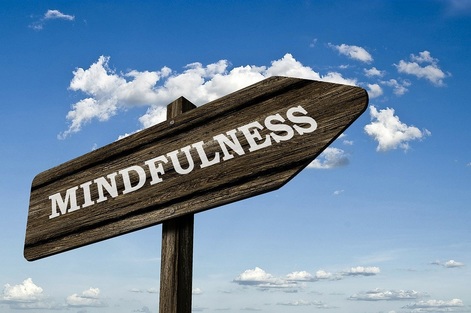
Mindfulness Signpost
What is mindfulness? Some people think it’s all about trying to empty your mind. Thankfully for me, this is far from the truth! We all have thoughts. Constantly! And we often have the same kinds of thoughts over and over and over again. When we are being mindful, we recognise what is going on in the present moment whether that’s in our thought patterns, our emotions, the sounds we can hear or the smells we are aware of…
 
Jon Kabat-Zinn (who set up the Mindfulness Based Stress Reduction Clinic in Massachusetts) says that, put simply, mindfulness is:
 
“paying attention to the present moment, in a particular way, without judgement.”
 
If we spend too much time thinking about the future, we are more prone to experience anxiety.
 
If we spend too much time having thoughts based in the past, we are more likely to suffer with symptoms of depression.
 
When we centre ourselves firmly in the present, experiencing all that that has to offer whether we perceive it as good or bad, we tend not to experience the symptoms of anxiety or depression. Instead, through simply having an awareness of what is going on right now - whether that be in our thoughts, emotions, physical sensations, or sensory perceptions such as sounds and smells - we come to realise that we are more in control of our own ‘now’, our own present moment, than anyone else or any external situation could ever possibly be.
 
There are 7 attitudes to mindfulness that underline the whole of our mindful practise whether that is during a formal meditation or during our everyday lives, for example while having a conversation, making a meal, having a shower, brushing our teeth, driving or whatever.
Whatever we find ourselves doing, these 7 attitudes can help to underline a more gentle acceptance - a gentle acceptance of ourselves, of others, and of situations.
 
1. Non-judgement – we constantly form judgements. Once you undertake a mindfulness practice you may start to recognise when and how often you form these judgements. This obviously seems fine when you judge something as good. But stress may ensue when you judge something as bad. When you accept that life is full of ups and downs… when you accept things as just being the way they are, stress tends to dissipate more easily. To quote Jon Kabat-Zinn once again, “you can’t stop the waves but you can learn how to surf”. Life happens and sometimes you just have to go with the flow.
 
2. Patience – allowing things to unfold in their own time… bringing patience to ourselves and to others. No amount of stress or anger will make the red light change any quicker to green. No amount of stress or anger or impatience will get any job done more quickly or more efficiently – so sit back and notice how things happen in their own good time. Or even simply notice the times when you are feeling impatient - and also notice how this feeling passes in its own good time. Take things easy-like and things tend to get done more easily.
 
3. Beginner’s Mind – this is simply seeing the world as a child would. When was the last time you really took time to notice the smell, texture and taste of a meal? When was the last time you really noticed what someone was saying to you instead of clouding a conversation with judgements or preconceived ideas? Our minds often tell us that they think they know more than they actually do. We let our beliefs about situations, about ourselves, and about others prevent us from seeing things as they truly are - in the present moment.
 
4. Trust – trust in ourselves and trust in our own basic wisdom. If something doesn’t feel right for you personally, then a basic premise of mindfulness is that you attend to it in whatever way does feel right for you. We can be responsible only for ourselves. Ultimately, it is us who have to live our lives. No-one else can do that for us.
 
5. Non-striving – goals, targets, and predicted achievements are all based in the future, introducing conditions that don’t allow you to be fully present with what is right now. In mindfulness practise, remember to allow anything and everything that you experience from moment to moment to simply be there - because it already is. If you are tense… pay attention to the tension. If you find yourself criticizing yourself, just observe the activity of the judging mind. Simply noticing what is really going on in any given moment – listening to the signals and messages your body is trying to convey all the time – helps you to make the right choices at the right time.
 
6. Acceptance – a simple openness to seeing and acknowledging things as they are. This does not mean approval or resignation. It simply means acceptance. One thing that is a true constant is change. Everything changes. We change. Other people change. Situations change. Accepting that things, people, situations, thoughts and emotions never stay the same helps us to live moment by moment.
 
7. Letting go – cultivating a non-attachment. Letting go is a way of letting things be. Let go of that hurtful conversation that took place years ago – it’s not happening now and hearing it over and over again in your mind never really helps. Let go of those ruminating thoughts that clutter up your mind at work and notice what is really going on. Simply noticing when you are attached to things, situations, people or emotions (whether they are perceived as good or bad) can help make you feel more in control. Just be aware of what you’re holding on to.
 
So mindfulness is not about clearing your mind. Instead, it’s about being more aware. Falling awake not falling asleep.
 
“Mindfulness is paying attention to the present moment, in a particular way, without judgement.”


2 Comments

Top 10 Tips to Help You Stop Smoking Today.

31/8/2015

0 Comments

 
Words - Stop Smoking
- photo courtesy of David Castillo Dominici @ freedigitalphotos.net
As long as your motivation is high, hypnotherapy can work incredibly well to help you stop smoking. In fact, evidence suggests that the latest techniques achieve success rates of up to 60% from just a single session.

There are a few practical tips that you might find helpful either before or after a course of hypnosis. Some people find that being aware of these can make the process even easier. And remember – everyone’s different – some people just stop and never look back, while others need a bit more time.

1. Change your viewpoint – instead of thinking about quitting smoking which implies you’ll be losing something, realise that you will be gaining so, so much.

2. Get ready for change – Becoming a non-smoker is all about changing patterns and routines, and noticing what’s going on in your thoughts. For example, you tell yourself it relaxes you – it doesn’t. The only thing that is being relaxed is the urge to smoke.

3. Always be prepared – Try to think ahead and purposefully avoid patterns that will lead to a cigarette, for example, if you smoked in the car think ahead and don’t keep a packet there; if you smoked after a meal then think ahead and be prepared with something different.
Remember your own personal smoking triggers and plan for them. Plan ahead and think through all that you will be doing in the day – be aware of any potential threats to your quitting, for example, going to the shop where you used to buy cigarettes (picture yourself dealing with this and coming away with the cash you’ve saved instead); or when you’re out with friends who smoke (again plan what you’ll say and do if you’re offered a cigarette).

4. Be aware – To begin with, you might think about cigarettes a lot but that’s natural. Just be aware of the fact you will. Let the thoughts come and go. Don’t try to deny them. You might have loads of these thoughts to begin with or you might not – everyone’s different. Let your thoughts have a moan – and remember it’s only the nicotine wanting your attention. Then show them the door. This will get easier over time. To help, make sure you keep your mind and body occupied. Keep active. Go for a walk.

5. Water - Always have a bottle of water with you. Take sips whenever you want to knowing that water is good for you and it’s helping you to flush out toxins from your body.

6. Fruit and veg snacks - Have plenty of fruit and veg to hand and again eat these when the thoughts about cigarettes come into your mind.

7. Life will still happen - Remember that life won’t suddenly turn into a bed of roses just because you’ve escaped from the smoking habit. Stuff happens. But over time you’ll notice that you deal with all the rubbish in a much calmer way – the bills will still arrive, cars will still break down, and you’ll still get caught in the rain every so often. But you’ll find yourself dealing with these unexpected events in a much calmer way. You’ll feel more in control.

8. Deal with cravings for what they are - Cravings usually don’t last very long – minutes at a time (up to 20 minutes at the most) and for only 2 to 3 weeks. If you can hold out for those first few minutes, then the craving tends to disappear, especially if you purposefully start to engage with another activity.

Every time you get the urge to smoke put this in perspective of being smoke-free for the rest of your life and all looks good.

9. Exercise – Exercise as a diversion tactic works incredibly well. Not only that but you’ll be gaining by increased levels of fitness at the same time. No need to go mad though – even a gentle stroll round the block can work wonders.

10. Breathe deeply – your breathing helps to relax you. If you learn how to breathe deeply into your diaphragm any feelings of agitation soon dissipate.


And then hypnosis can add that extra powerful dimension into the equation too, making success much more of a possibility.


I offer ‘Quit 4 Life - hypnotherapy to stop smoking’ sessions at Central England Holistic Therapy Centre in Kings Heath, Birmingham. Please get in touch if you’d like to find out more:


07733 839 591   -   [email protected]   -   or fill in the contact form.

 *** Always remember, it’s a good idea to seek medical advice from your GP before embarking on a course of hypnotherapy to stop smoking.

0 Comments

4 tried and tested techniques that complement my hypnotherapist’s toolbox

31/7/2015

0 Comments

 
Hypnosis by itself can be incredibly powerful. However, there are other techniques that I use in tandem with hypnosis, depending on your specific issue and the desired results. Here I’m going to be outlining four of them:

1. EMDR – Eye Movement Desensitisation and Reprocessing

This is an extremely effective technique that has been proven to work with all sorts of issues but especially those concerning some sort of trauma. It has been used successfully in helping people with post-traumatic stress disorder and is based on repeating side to side movements of the eyes. It is based on the idea that traumatic events can ‘clog’ the neural pathways in the brain and once clogged it is difficult to move on. However, the simple procedure involving these simple eye movements while focusing on the issue needed to be resolved can help to un-clog these neural pathways. EMDR can be very effective and may work extremely quickly.

2. EFT – Emotional Freedom Technique

EFT involves ‘tapping’ on various points of the body. These points are related to the meridians or energy centres of the body. When carried out in a set pattern, whilst focusing on the issue at hand, remarkable results can be achieved. Again, as with so many of these techniques, it can be used on a wide variety of issues and is often utilised when dealing with cravings, fears and phobias. 

3. NLP
– Neuro-linguistic Programming
(What is NLP Coaching?)

NLP is a method of changing the patterns our brains may have become accustomed to through changing the way we communicate with ourselves and others. The language we use, and encounter, on a day to day basis is incredibly powerful, and can be utilised for positive outcomes if we so wish. Techniques in NLP are often incorporated into the hypno-therapeutic process and work well when dealing with all sorts of issues. 

4. Mindfulness
(Mindfulness Now)

(Issues that Mindfulness may help with)

(Try mindfulness for yourself right now)


Mindfulness is about centring ourselves in the present moment. It is not about escaping our fears but, instead, is about facing whatever is going on right now. It is about having a gentle compassion for ourselves, while accepting all that makes this moment completely unique. Mindfulness has been used literally for thousands of years, and has its roots in Buddhist traditions. These traditions have shed light on many contemporary psychological conditions and have been adapted to help especially with issues surrounding depression and anxiety.


Relaxing and letting various suggestions wash over you is a very powerful part of hypnotherapy. However, these other techniques complement hypnosis beautifully. And sometimes it’s difficult to say which technique is being used at any one time because they merge into one another so well and have the same basic aim – to help you to make a change of some sort – whether that’s feeling happier and more relaxed, dealing with a phobia, feeling more confident, or losing a habit… 

I always have a full client intake interview (which sounds very grand – it’s basically a good old chat to see what you’d like help with) when I start to work with anyone coming to me for the first time. Then I can be sure of choosing the most suitable methods and techniques for that particular person and their particular issue. 

If you’ve read this and are wondering whether to try hypnotherapy for yourself, why not give me a call on 07733 839 591 or drop me a line at [email protected]. Or check out the rest of the website www.rmbhypnotherapy.com for more information and testimonials from satisfied clients. 

Thanks!
Rachel


0 Comments

10 Really Simple Mind Hacks for Success

30/6/2015

0 Comments

 
Picture
Photo courtesy of Ambro - freedigitalphotos.net
I often wonder what expectations people have of hypnosis. Not just the amazing things it can do but actually how it works. I’m absolutely sure that, no matter how many times I explain it’s a completely natural process they’ve all experienced before, people still expect to be put under some kind of weird and wonderful spell and that I’ll have some sort of control over their minds. And of course, as a result, they’ll be miraculously transformed! 

What I find even more fascinating than this notion is that this miraculous transformation can actually take place but that my client is fully responsible for, and fully conscious of it. The mind is a powerful thing. All I do, as a hypnotherapist, is suggest that thoughts and imagination are directed in a particular way and in a particular direction, while the client is feeling very relaxed. 

So I thought I’d share with you just a few of the basic techniques I have at my disposal, to use with my clients whatever issue they may come to see me with: 


  1. Relaxation – although you don’t have to be fully relaxed in order for change to take place it is more easily accomplished if you are feeling calm. When you are in this state, your breathing and heart rate tend to regulate and you allow yourself to become more open to things which might be suggested to you.
  2. Having a focussed awareness - Hypnosis utilises a focussed awareness to allow you to concentrate on what is going on in your thoughts at any particular moment.
  3. Visualisation - if you can see yourself doing something, in your mind’s eye, you will be more likely to actually do it. I ask my clients to visualise themselves at some time in the future, making this as real an experience as it can be. I ask them to use all of their senses, not just their visual sense, to make this feel really real.
  4. Imagination – it is often said that imagination is the language of the subconscious mind. And it is often in the subconscious mind where deep-seated issues are rooted. It follows that it is in the subconscious mind where the answers lie. I often ask my clients to imagine what a particular part of their mind might look like. And, even though it might sound a bit strange, we hold a conversation with this particular part. Talking to the subconscious in this way (while being fully conscious of what is going on) can lead to amazing insights.
  5. Allowing yourself to be open to success. Some people think you have to believe in hypnosis in order for it to work. I prefer to say that you just need to allow yourself to be open to the possibility. There are a huge number of different techniques within the realm of hypnotherapy that may be utilised for any one presenting issue – some of them seem incredibly simple. And yet are incredibly effective, often giving rise to change at a quite profound level.
  6. Anchoring – you know how evocative smells are? Well smells are a sensory anchor. They are sensory experiences which act as a reminder of past emotions and previous times in your life, and enables you to bring all of the feelings associated with that time back to the present. While they are under hypnosis, I’ll often ask my clients to install a new physical anchor, for example, squeezing their thumb and forefinger together while feeling really confident and positive. With practise, all they will need to do in order to feel those confident feelings again is squeeze their thumb and forefinger together. The mind and body working in harmony.
  7. Repetition – like so many other things, we become good at things we do over and over again. This helps to set up new neural pathways in our brain. So, if you want to be able to respond to situations in life in a calmer way then it’s a good idea to take time out for moments of relaxation a number of times every day. I very often give recordings of my hypnotherapy sessions to my clients and ask them to listen to them once or twice a day. This helps to install those new neural pathways and make them strong.
  8. Seeing things as they really are – all too often our minds get clouded with judgements, worries, self-limiting beliefs, and lack of confidence. Hypnosis can enable you to see the true picture more clearly with all the different options that might be available to you when you are able to simply let go of this self-sabotage.
  9. Compassion – no matter what you’re experiencing at this point in time, you (like everyone else) are simply doing the best you can to live life. Very rarely do we give ourselves credit for this. And we should!
  10. Breathing – our breathing is like a bridge between our minds and bodies. When we become aware of our breathing, and perhaps what it’s trying to tell us, we put ourselves in a better position in order to deal with what’s going on. When we’re feeling stressed our breathing will tell us by becoming quicker and more shallow. When we notice this we can choose to alter our breathing so that it’s slower and deeper. After a while, this sends a message to our brain that our body is feeling calmer now so there is no need to worry. Again, it’s that mind/body connection working in harmony.

So, as you can see, some of the techniques that are used in hypnotherapy are really very simple and yet are so incredibly powerful. It takes teamwork to achieve results – the hypnotherapist guiding and suggesting new thought processes and courses of action; the client motivated and open to changes taking place, and willing to play their part in things too.

You can try any of these techniques for yourself (this page will help you get started) and see the benefits that they bring but to benefit fully it’s a good idea to be guided by a fully qualified hypnotherapist such as myself.
0 Comments

Is Institutional Logic being left unquestioned?

3/6/2015

0 Comments

 
I’ve just watched a local news programme where the issue of stress amongst teaching staff was being discussed. Ofsted had been quoted as ‘advising head teachers that they should be helping their staff to manage their workload more appropriately,” or words to that effect.

Earlier on in the day, I’d been at a meeting with eleven other hypnotherapists where a lot of the discussion had centred around the idea that unless the root cause of a problem is at least acknowledged (inwardly or outwardly), then the solution might always be evasive.

In a way, it’s a good thing (for me) that stress continues to ensue in schools – I have had clients who are primary and secondary school teachers, and adult education tutors, coming to me for various stress/work-related issues; and children (usually presenting with an issue that has anxiety as a root cause) again spanning the primary and secondary age range. So, for me, it means more business. But at some point, I feel, the education system has got to sit up and take note of the fact that there needs to be a huge shift in its logic, of some sort. Otherwise people like me will continue to be needed to put sticking plasters on problems whose causes run much, much deeper than an ‘inability to manage workload appropriately.’  

And, of course, it’s not just the education system. 

It seems that life is no longer there to be lived and enjoyed but instead it’s there so you can ‘achieve the best’ you possibly can. To strive towards goals that constantly move further away, out of your reach. Now don’t get me wrong, I’m all for ‘doing my best’ and achieving results – being a hypnotherapist, I depend on people getting results and making changes. However, is this really the most important thing, all of the time? After all, there are so many different ways in which we can all be successful. 

A recent conversation in one of my mindfulness groups springs to mind. We were talking about the ‘rat-race’. Have you ever sat back and thought “What’s it all for?” You go out to work, to pay the bills, in order for you to be able to live in a nice house, that you rarely get to see, because you’re always out at work, in order to pay the bills, to live in a nice house… It makes you think. 

Some authorities think that a lot of illness and disease in today’s world can be traced back to stress and anxiety (suggestions for books on this and other related subjects can be found here). Our bodies were not designed to have stress hormones surging through them on a constant loop. They were equipped to deal with a sudden threat and then recover. In the natural world, some animals shake continually for a few minutes after being chased by a predator to rid themselves of all the stress chemicals. Then they get up and carry on as if nothing had ever happened. Let’s face it, generally speaking the human race isn’t brilliant at dealing with stress. It’s gives itself too much… and then doesn’t know how to deal with it.

I’m constantly aware that, as a teacher of mindfulness and a clinical hypnotherapist, I am often helping people to deal with the stress, anxiety and depression that are, all too often, side effects of today’s ‘modern lifestyle.’ All well and good maybe, from my point of view. But wouldn’t it be good if society, as a whole, and the institutions that act as our society’s backbone, operated in such a way that we were able to be more compassionate with ourselves and with others – so we were not constantly competing against each other, not constantly having to strive to prove our worth and not always having to prove we’d done our best. The human race is naturally competitive – survival of the fittest and all that. But, at some point (and in my opinion) this competitiveness has little worth if there is not, at the same time a good deal of compassion and respect – for self and others.

I caught an episode of Thinking Allowed on Radio 4 the other day – they were discussing the ‘Happiness Industry’ and the ‘Wellness Syndrome.’
 

The presenter, Laurie Taylor, was interviewing William Davies, author of “The Happiness Industry - How the government and big business sold us health and well-being.” He is also Senior Lecturer in Politics at Goldsmiths, University of London. He outlined the fact that:

“It’s far more common for policy makers to turn to the individual and turn to their behaviour and what they can learn by way of behavioural and cognitive tips than it is to actually question some of the institutions which might actually be the source of their unhappiness in the first place.” In other words, the root causes of stress are often ignored and the individual is to blame for ‘not managing their work load properly.’

He goes on to suggest that practices such as mindfulness simply act as that much-needed sticking plaster:

 “They are also coping mechanisms which are draped over an institutional logic and a political/economic logic which effectively tells everyone that they are in a race against each other the whole time and they are going to be measured, audited, subjected to what we know are stressful practices by managers and policy makers and then take time out to practice mindfulness or whatever as a way of trying to cope with a whole institutional logic which is generally left unquestioned.” 

If you’d like to listen to the whole interview, you can do so here.  

“A whole institutional logic that is generally left unquestioned?”

I'm sure, over recent years, those questions have begun to be asked. But then, does anyone have the answers - so that the sticking plasters are no longer needed, because the wound is no longer made in the first place?

0 Comments

Celebs and hypnosis.

25/4/2015

0 Comments

 
Well, ‘Hypno-Dog’ has just got through to the next round of Britain’s Got Talent (ITV1 – 25.4.15). All good, clean fun and if nothing else, I guess it might get people talking and possibly wondering “Is hypnosis real?” or “Does a state of hypnosis really exist?” even though it was pretty obvious (from this round of BGT anyway) that it was just a comedy act. Interestingly though, the judges put Princess the Dog through to the next round because they were actually quite interested, I think, in what else could be done by the owner (although I don’t think Paul McKenna really has anything to worry about just yet)! Ant and Dec were supposedly hypnotised to forget the number 7 when counting to 10 – did you believe that that’s what happened or do you think they were just playing along? Whether Princess’ owner is a bone fide (or should that be bone fido?!) hypnotist I don’t know but this was the one part of the act which could’ve actually been legit – one of the possible strange quirks of the human brain under hypnosis.

Did you know however, that over many years, a number of celebrities have sought the services of a hypnotherapist for much more life-enhancing reasons? Here are just a few, unashamedly found via Google whilst I was watching Britain’s Got Talent (that's my disclaimer anyway):

Stephen Fry once used a hypnotherapist so that he could sing in time with the music for a comedy performance with Hugh Laurie. You can see him talking about it here.

Mark Knopfler, Matt Damon, Drew Barrymore, Ellen Degeneres, and Ben Affleck all reportedly used hypnotherapy to help them quit smoking. You can see Paul McKenna working with Ellen here.

Sylvester Stallone used a hypnotist whilst filming the Rocky films back in the 70s.

And whilst filming Waterworld, Kevin Costner used hypnosis to ‘cure’ him of seasickness.

Both Gerri Halliwell and Sophie Dahl have used hypnotherapy to help them with weight management.

And David Beckham used it to deal with ‘personal issues’.

When he was a child, Orlando Bloom was hooked on chocolate so his mom asked a hypnotist to help out.

And apparently, The Duchess of Cambridge used techniques in self-hypnosis when she was expecting Prince George.

And it’s been reported that Jennifer Saunders saw a hypnotherapist when procrastinating about writing Absolutely Fabulous - The Movie in 2014. You can see her being interviewed by Jonathan Ross here.
On the Christmas radio show (2013), Dawn French had bet £100,000 that she would never get down to writing the script, knowing the difficulty she'd had over the years (apparently, she had started writing the script 20 years earlier)!
By March 2014, Jennifer was seeing a hypnotherapist in the hope of dealing with her procrastination and getting it written within the year.

And by January 3rd 2015 she announced that it was completed and should be filmed and released some time this year.


So, as you can see from these celebrity examples, hypnotherapy can be life-changing. Or it can simply make you forget the number 7.

I wonder what Hypno-Dog has in store for us next time? ;)


0 Comments
<<Previous
Forward>>

    Author

    Rachel Broomfield
    Clinical Hypnotherapist and Teacher of Mindfulness

    Categories

    All
    Helping Children
    Hypnotherapy
    In The Media
    Mindfulness
    Stop Smoking
    Weight Management

    Archives

    April 2017
    February 2017
    January 2017
    December 2016
    October 2016
    September 2016
    August 2016
    July 2016
    May 2016
    March 2016
    February 2016
    January 2016
    November 2015
    October 2015
    September 2015
    August 2015
    July 2015
    June 2015
    April 2015
    March 2015
    February 2015
    January 2015

    RSS Feed

IMPORTANT: IF IN ANY DOUBT PLEASE SEEK MEDICAL ADVICE FIRST
No hypno-therapeutic or mindfulness techniques should ever be regarded as a substitute for professional medical care. They should always be seen as complementary.
DISCLAIMER: RESULTS MAY VARY FROM PERSON TO PERSON
Website Disclaimer    -    Privacy Policy    -    Cookie Policy    -    Terms and Conditions    -    Therapy Disclaimer
Thanks for visiting!

Copyright 2026 Rachel Broomfield.
All photos have their own attribution.
Graphic design in headers courtesy of http://freepsdfiles.net/
Proudly powered by Weebly